
Robinhood, a commission-free investing app that prides itself on “democratizing finance for all,” found itself in the midst of a crisis when it froze certain stocks that small investors were profiting from.
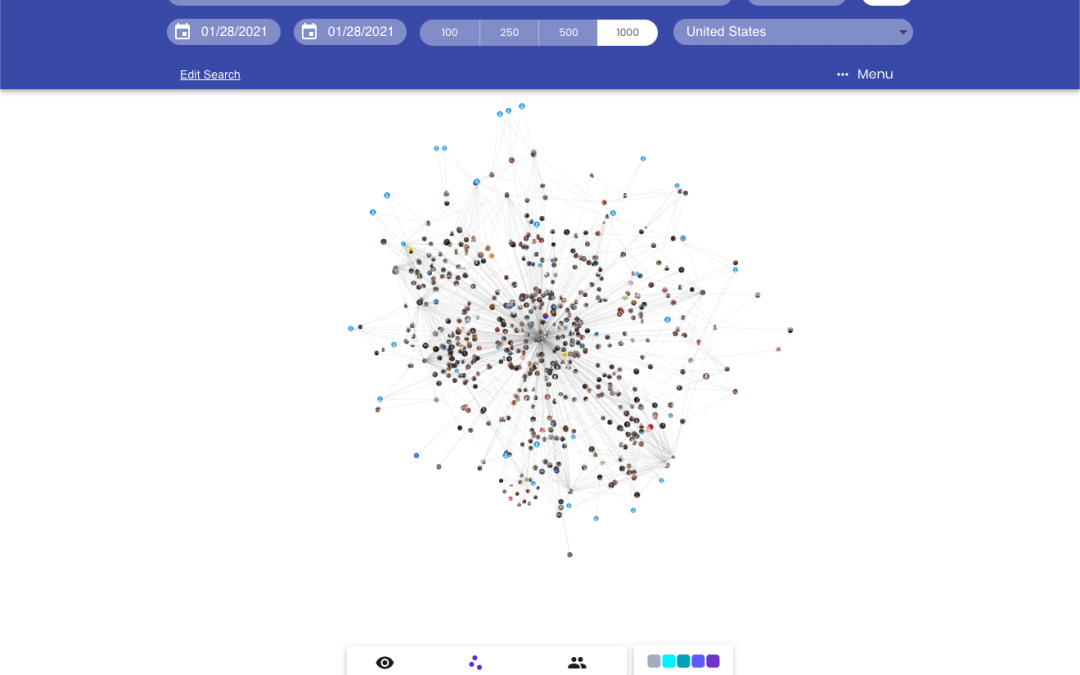
Using Paraqeet, we searched Robinhood’s Twitter handle, @RobinhoodApp, over a 24-hour period on Jan. 28 (the day Robinhood froze purchasing). We took advantage of Paraqeet’s verified feature and limited the results to verified users only to uncover which politicians, public figures and news outlets guided the day’s narrative.
What happened (briefly): Redditors, organizing on the forum r/WallStreetBets, invested big in underdog stocks such as GameStop, AMC and Nokia. And the stocks skyrocketed. This caused Wall Street hedge funds, who short sold these stocks in anticipation of their decline, to lose billions of dollars.
When small investors made significant amounts of money off the stock market, Robinhood successively froze trading of GameStop, AMC and others.
Twitter erupted in an outcry. People were unable to reconcile Robinhood’s recent action with the company’s expressed belief in a “financial system that should be built to work for everyone.”
@RobinhoodApp: Let the people trade?
A tweet from 2016 formed the center of the network in Paraqeet. In it, Robinhood stated, “Let the people trade.” Twitter users responded to this tweet in outrage, pointing out what they said was a glaring hypocrisy between the brand’s mission and its recent actions.
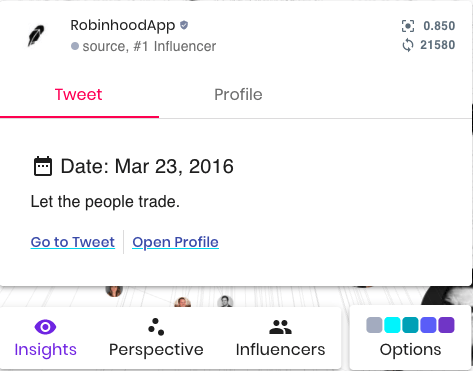
A 2016 tweet from Robinhood was uncovered by Twitter users amid the brand’s controversial decision.
Because nothing truly goes away on the Internet, users jumped at the opportunity to call out Robinhood.
-
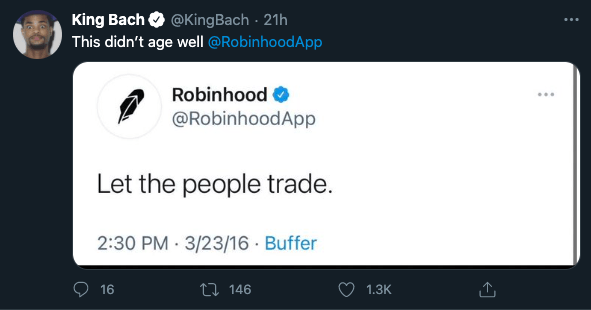
- An example of a tweet that called out Robinhood’s hypocrisy.
-
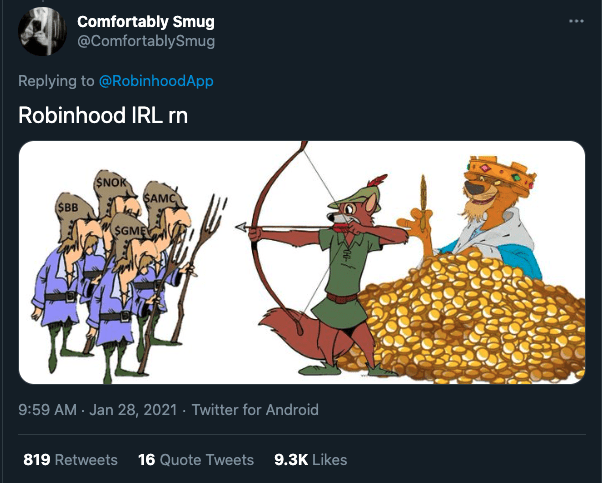
- Twitter users were quick to create Robin Hood memes.
Reactions to this tweet demonstrated how users began to perceive Robinhood as hypocritical and untrustworthy. Without an adequate explanation, the internet speculated that Robinhood opted to protect itself and Wall Street, rather than the everyday investor (the brand’s target user).
Dave Portnoy, AOC, Elon Musk appeal to populism
Politicians and public figures who you would never expect to come to an agreement found common ground. They questioned the legality and fairness of Robinhood’s ability to freeze purchasing on stocks against an investor’s will.
-
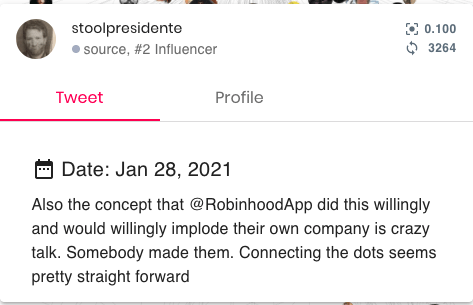
- No. 2 influencer Barstool Sports founder Dave Portnoy
-
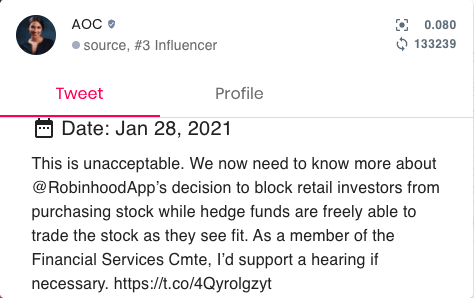
- No. 3 influencer Congresswoman Alexandria Icasio-Cortezo (NY-14)
-
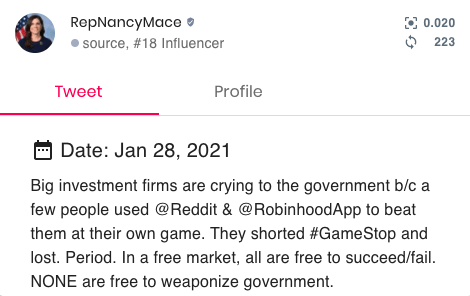
- No. 18 influencer Congresswoman Nancy Mace (SC-01)
-
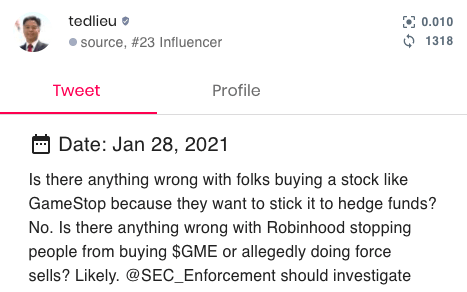
- No. 23 influencer Congressman Ted Lieu (CA-33)
-
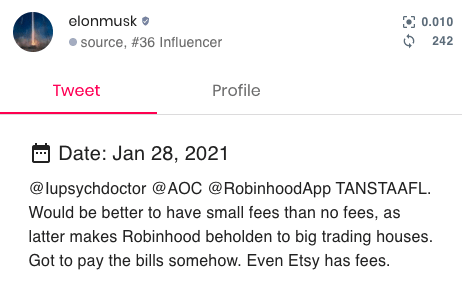
- No. 38 influencer Tesla CEO Elon Musk
The influence of politicians and public figures who rooted for retail investors encouraged a narrative that this story was one of everyday people versus elites.
This classic David vs. Goliath narrative strikes a chord with anyone, not just active investors, which led to a swell of momentum on Twitter.
Lawsuits ensue
In a timely fashion, public officials listened to the demands for an inquiry and filed lawsuits against Robinhood and other brokerage firms. In a matter of hours, the internet prompted legal action. Paraqeet asserts that online behavior influences offline action, and this real-world example supports our position.
-
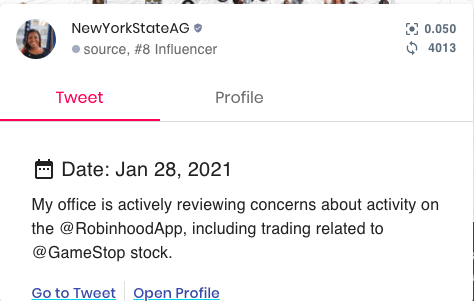
- New York State AG pursues legal action.
-

- News of a class action complaint filed in NY’s southern district.
Robinhood breaks its silence
After a day of accusations that Robinhood froze stock illegally and took actions to protect itself and Wall Street, Vlad Tenev, Robinhood’s CEO, attempted to reverse the narrative in an interview with journalist Andrew Ross Sorkin.
-
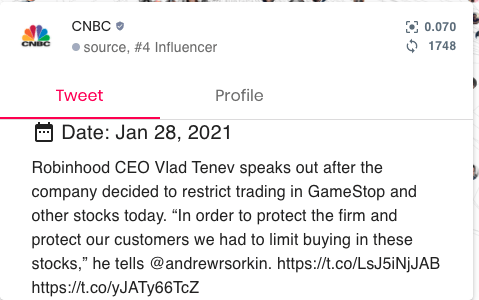
- CNBC tweets interview with Robinhood CEO Vlad Tenev.
-
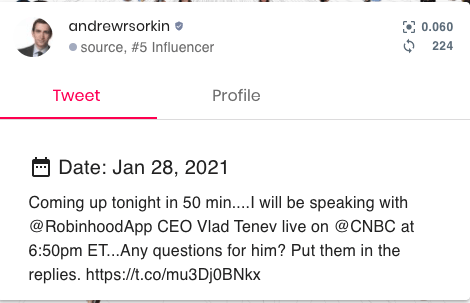
- Journalist Andrew Ross Sorkin teases interview with Robinhood CEO.
With people wanting answers, Tenev’s first public appearance garnered plenty of attention.
In his interview with Sorkin, Tenev flipped the script and claimed that Robinhood froze trading to “protect the firm and our customers.” Tenev explained broadly that the decision was “part of normal operations” in response to market volatility.
Robinhood’s explanation was met with caution and suspicion from an internet that had been questioning the company’s motives throughout the day. The feelings of mistrust were already there, and we observed the response in real time on Paraqeet.
Key takeaways
Paraqeet enabled us to follow the David vs. Goliath narrative that captivated the internet on Jan. 28. Across the political spectrum, people demanded to know why Robinhood and other brokerage firms froze buying on stocks that benefited small investors.
According to Axios, Robinhood’s decision makes sense and may have been the necessary course of action. But the SEC is looking into the day’s events, making clear that the agency “will act to protect retail investors when the facts demonstrate abusive or manipulative trading activity that is prohibited by the federal securities laws.”
Facts will come to bear and this story will recede from the headlines, but it is safe to say we learned a lot from the conversations that circulated around @RobinhoodApp on Jan. 28:
- No tweet gets buried, even ones posted five years ago.
- The internet has proven its ability (once again) to organize, mobilize and demand action.
- Public figures can foster narratives and help grow movements solely with tweets.
- The finance world isn’t confined to trading floors on Wall Street anymore.
- For business and brands mitigating a crisis, be quick to set the narrative before the internet defines it for you. Transparency and accessibility are also required in today’s world of armchair watchdogs.