
While heated debates between nations are easy to come by these days, it’s fairly rare to find one with enough spirit to transcend over two centuries. Enter the Elgin Marbles, or rather the Parthenon Marbles.
For a little bit of context, and in an effort to make a quite literally VERY long story short, the history of the Elgin Marbles dates to around 432 B.C. They are a collection of marble sculptures made by the ancient Greeks to decorate the top of the Parthenon in Athens. In the early 18th century, the Marbles were removed from their home in Greece by the Scottish Earl of Elgin.
During the early 19th century, and in fact for the previous 350 years, Greece had been overtaken by the Turks and was a part of the Ottoman Empire. The Earl of Elgin made a deal with the Turks and purchased the Marbles from the Ottoman Empire. Shortly after the Marbles left The Parthenon, the Earl of Elgin sold them to the British Museum, where they have resided since 1817.
Ever since this sale, the ownership of the Elgin Marbles has been an emotionally heated topic because Greek nationalists, along with international supporters, believe the Marbles should be brought back and preserved in their homeland. The acquisition of the Marbles raises much ethical debate as to whether the “sale” was a legitimate transaction or glorified looting. Nonetheless, the debate is alive and well, as can be shown through a quick search on Paraqeet.
On June 27, there was a benefit concert, with Desmond Child as the headliner, to raise awareness and funds to reunite the Marbles with their original home.
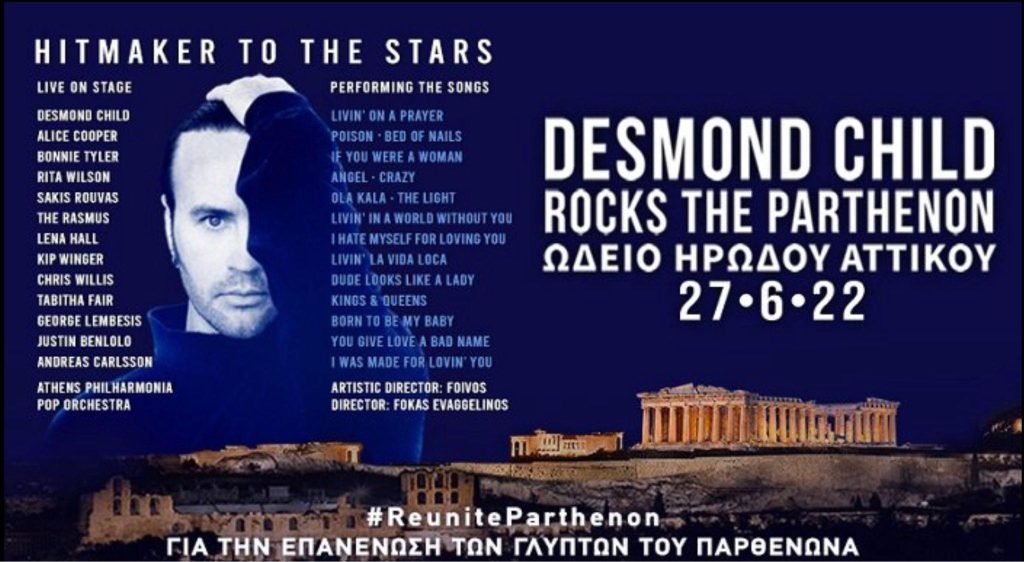
A Paraqeet search of #ReuniteParthenon reveals a monopolized conversation, with Child at the center. The event seems to have reinvigorated public interest in the debate.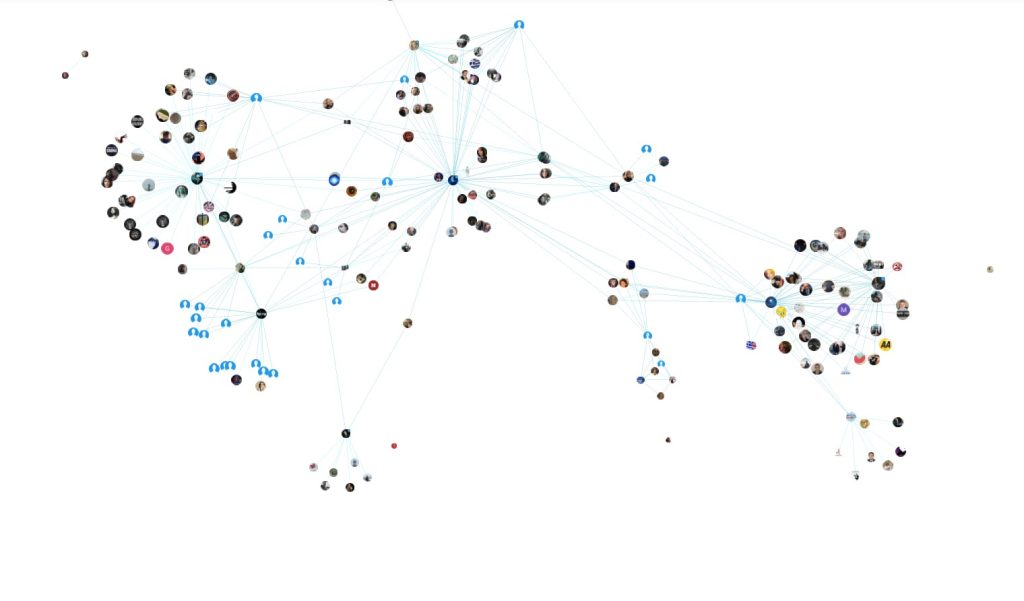

After the @DesmondChild tweets surrounding the event, an even bigger Twitter thread opened. This one was revealed with a Paraqeet search of “Elgin Marbles.”

Although the Greeks certainly have the most emotional connection to the fight for return of the Marbles, they are not the only supporters. There is a large population of Brits, including the outgoing prime minister himself — Boris Johnson — who are interested in the debate. A tweet by Telegraph Politics has placed the account as the No. 1 influencer in the Elgin Marbles Paraqeet search.
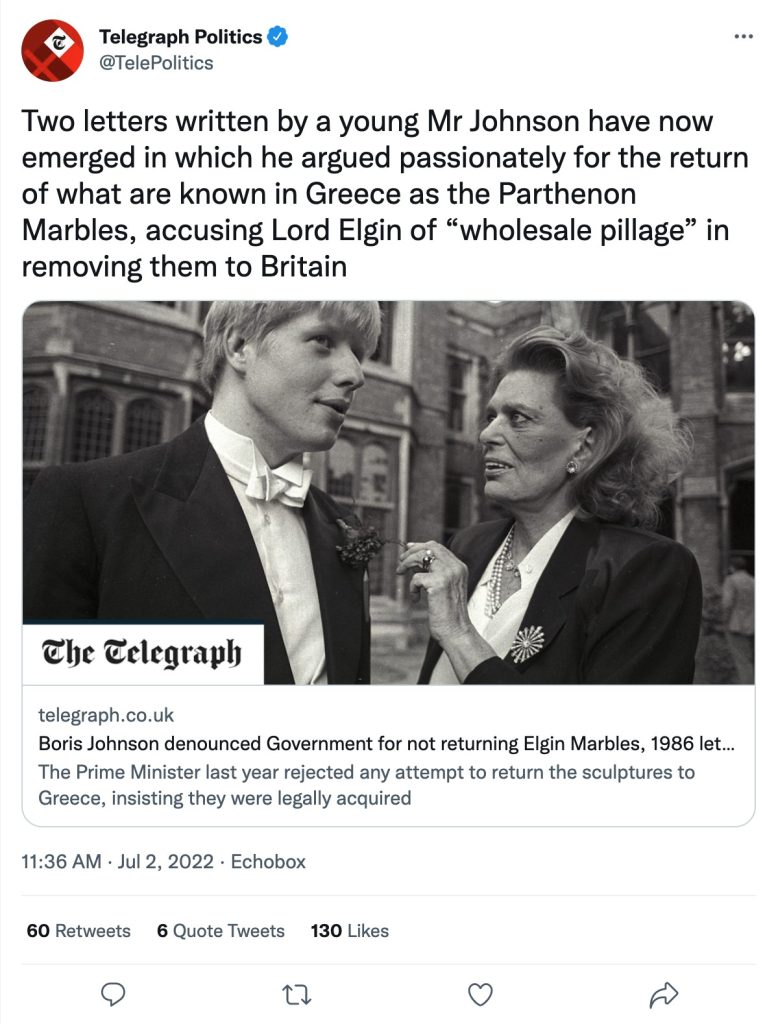
The tweet reveals a letter that had been written by Boris Johnson during his time as president of the Oxford Union. The letter was written in an effort to persuade the Greek minister of culture to speak at the Union, and expresses the sentiment that Boris Johnson himself was a proponent of the Marbles return. So why haven’t they been returned? That’s a great question, and a complicated one, as many wonder whose decision this really is.

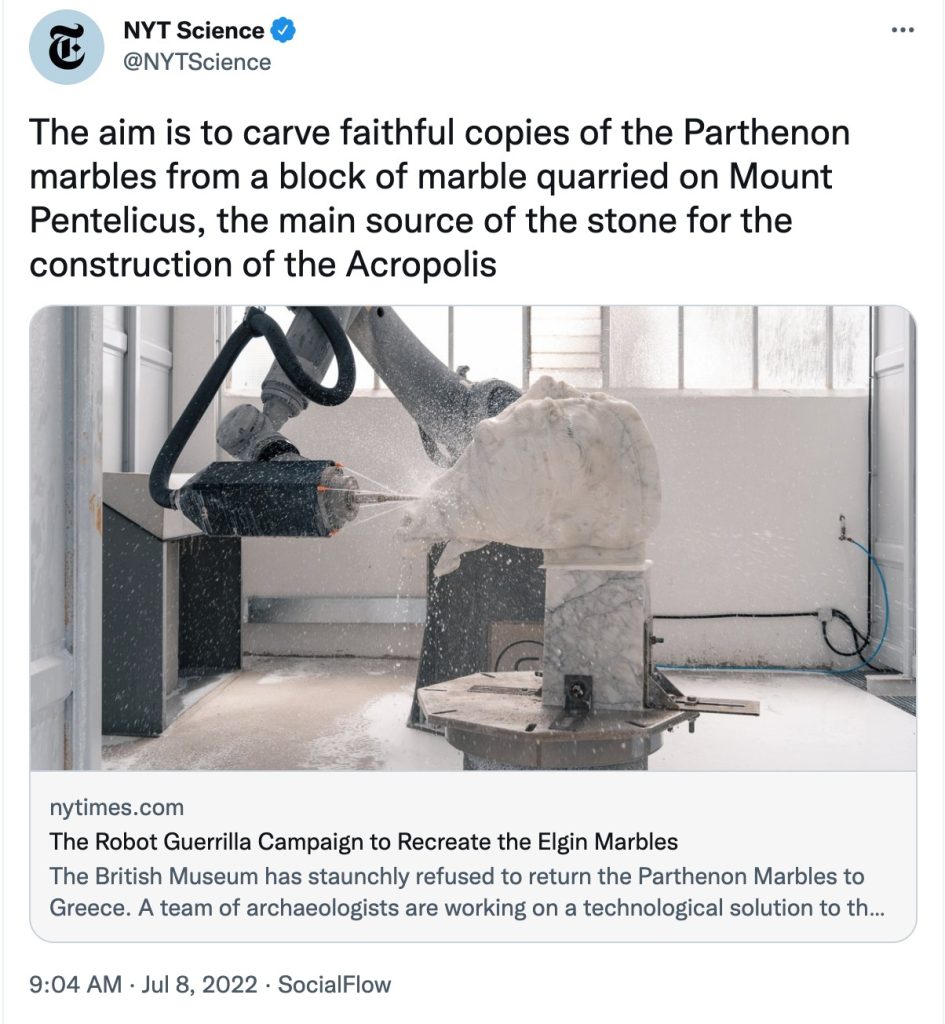
The thread reached an even larger scale after the New York Times (NYTScience) released an article on a new project that aims to 3D print replicas of the Marbles in an effort to address the issue. However, as the article states, “It is hard to imagine anyone who wants the marbles to remain at the British Museum being satisfied with something produced in part by robots, when the originals represent to them the high point of human artistry.”
The thread gets even more interesting as Twitter users offer their opinion on who the rightful owners of the Elgin Marbles are. Martin Lewis, an English broadcaster and journalist with over 1.6 million followers, engaged his Twitter community by posting a poll that produced fascinating results.
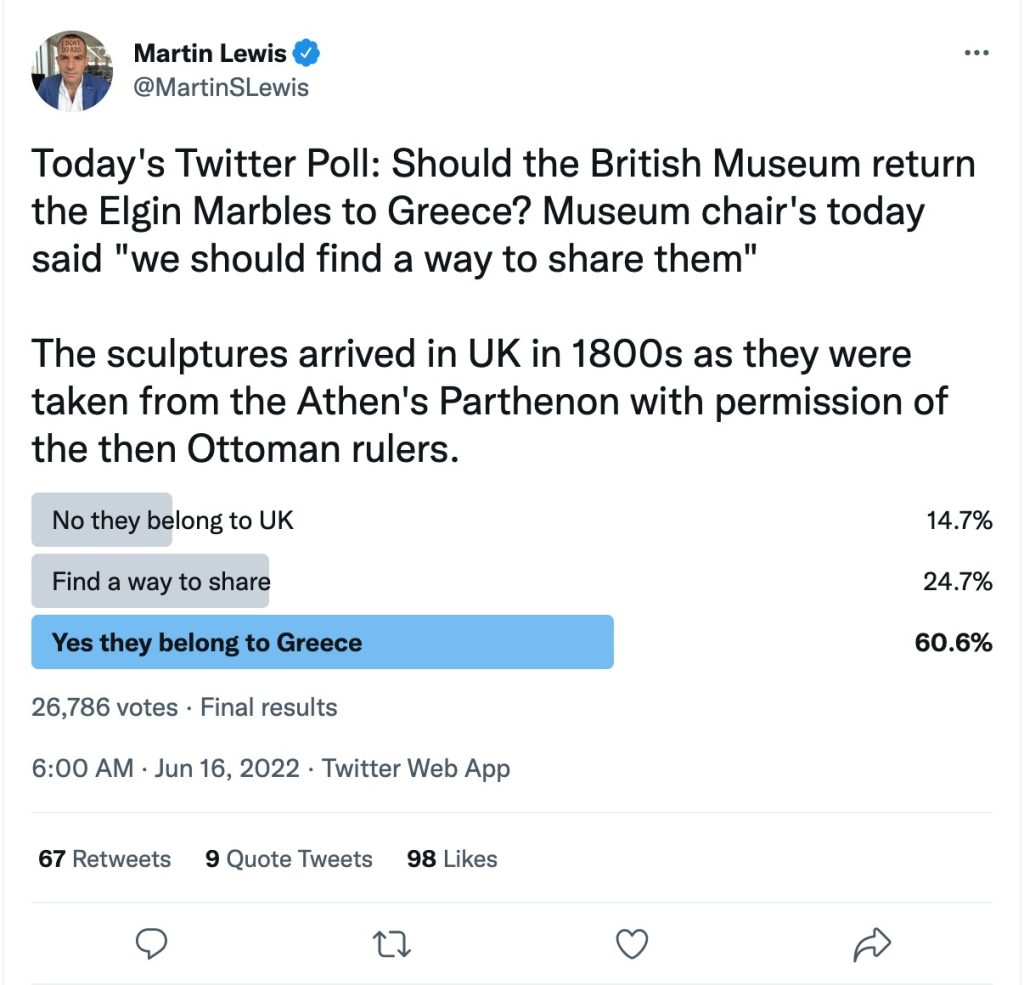
Over 60% of his audience believes the Marbles belong to Greece. Furthermore, considering he is an English broadcaster, many of his followers are presumably British citizens who have sided with the Greeks on this issue.
As the responses to the July 8 New York Times article rolled in, they seemed to be in alignment with this poll.
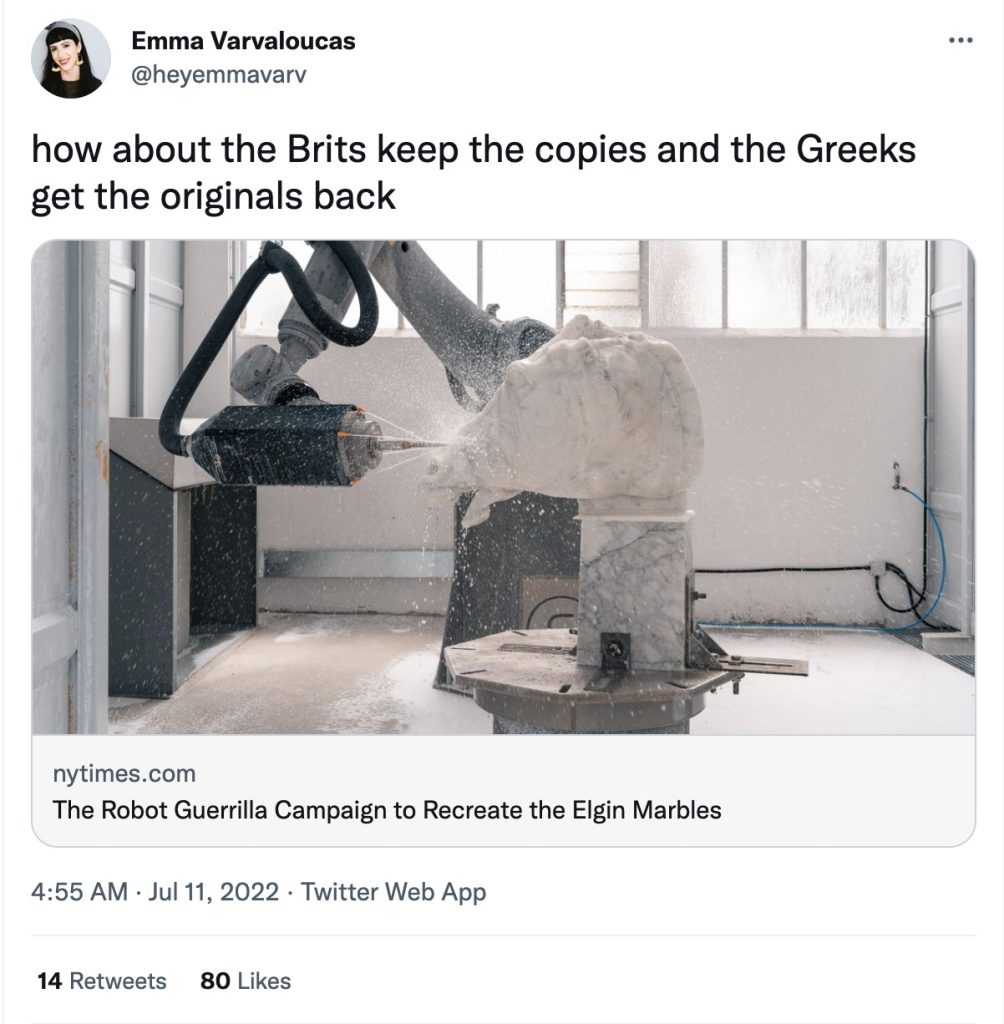
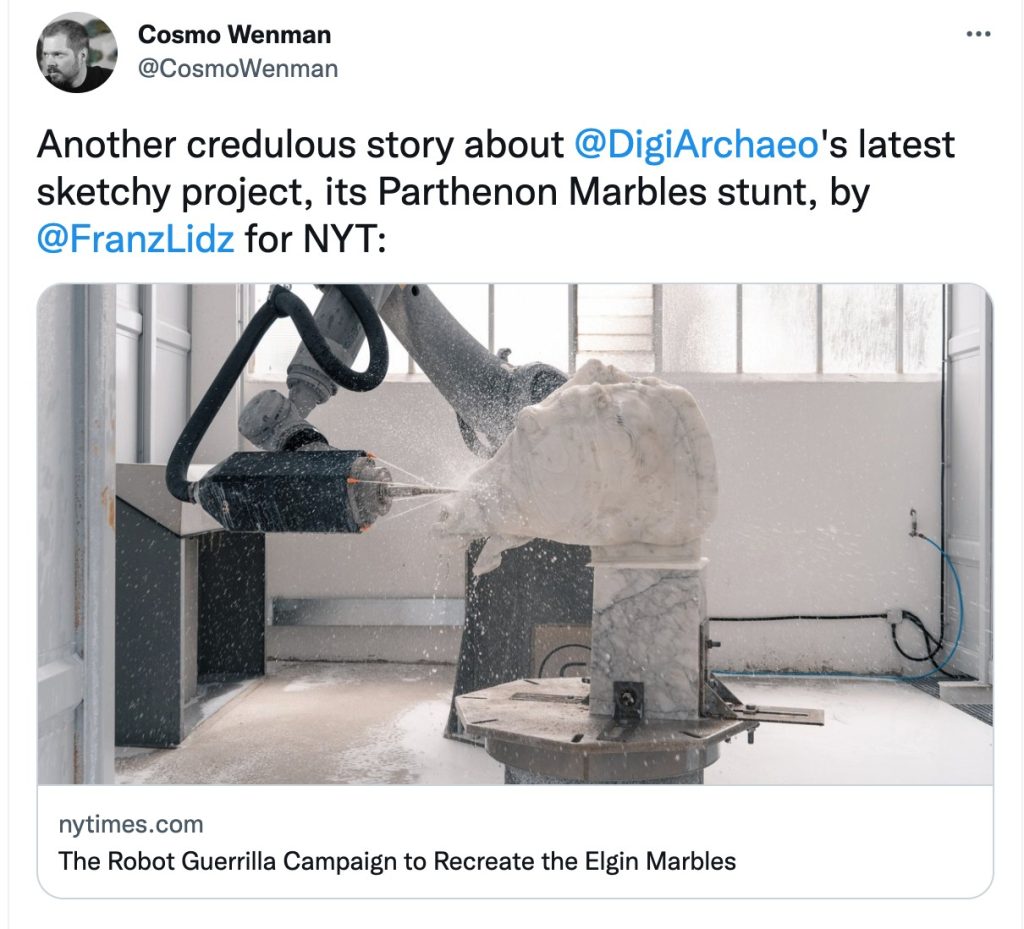

We wanted to see if the British Museum had weighed in on the topic, given the recent resurgence of interest, and specifically how and if it was connecting with its U.K. followers. Although the museum has 2 million followers, there was no mention of the Elgin Marbles debate among its active Twitter community members. The conversation was instead mostly dominated by the ending of an exhibit at the museum called “The World of Stonehenge.”


However, when we searched “Elgin Marbles” in a broader context in the United Kingdom, there was quite a bit of conversation going on.

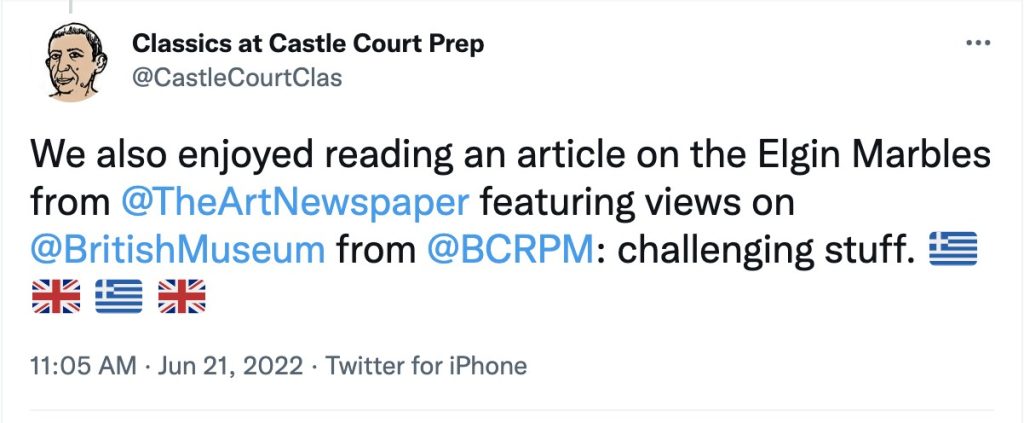
Most of the tweets shared the sentiment that the Marbles should be returned to Greece. However, @CastleCourtClas summed it up when he described the issue as “challenging stuff”.
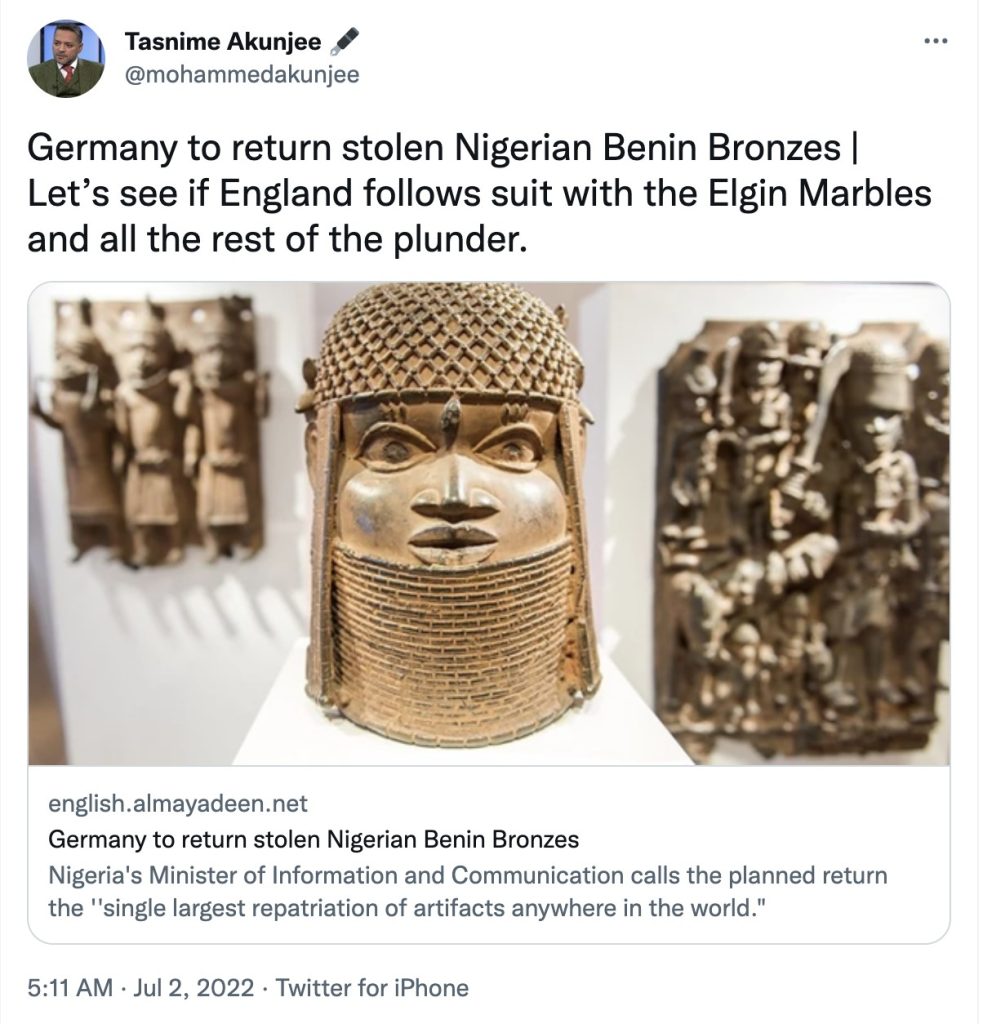
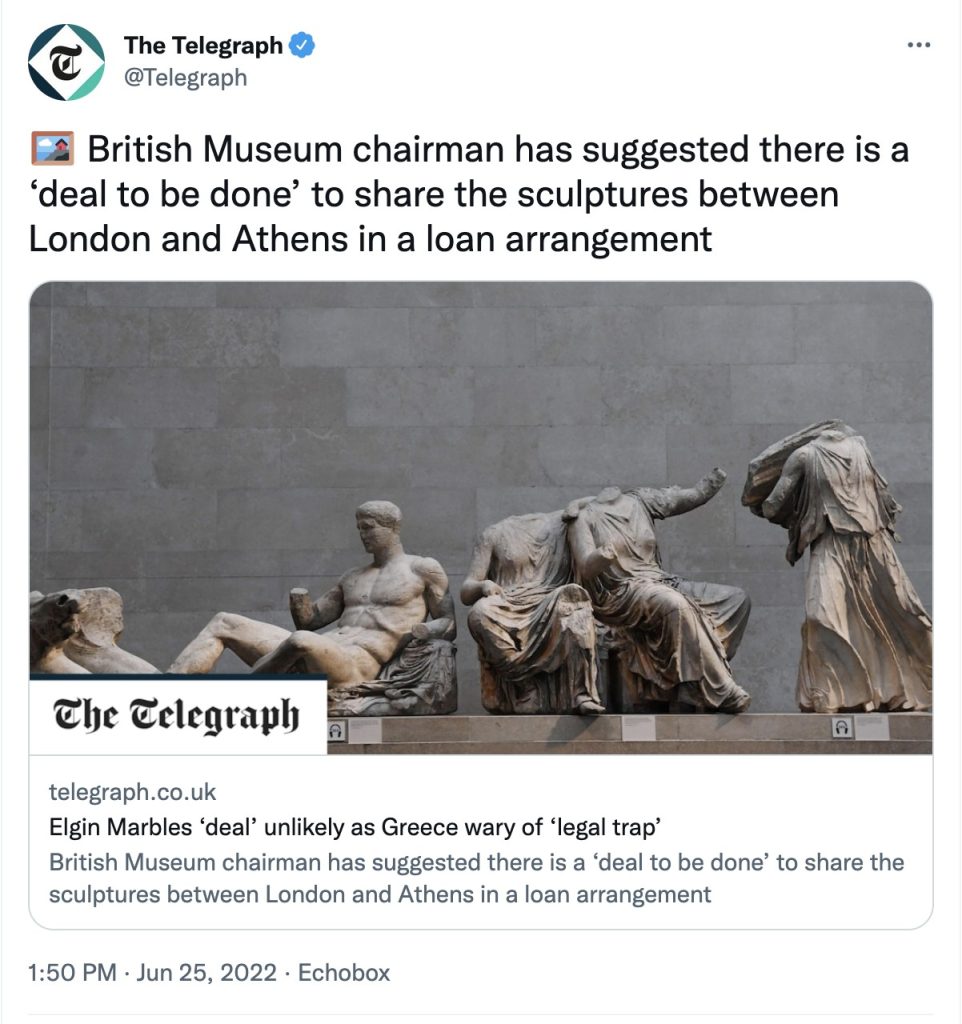
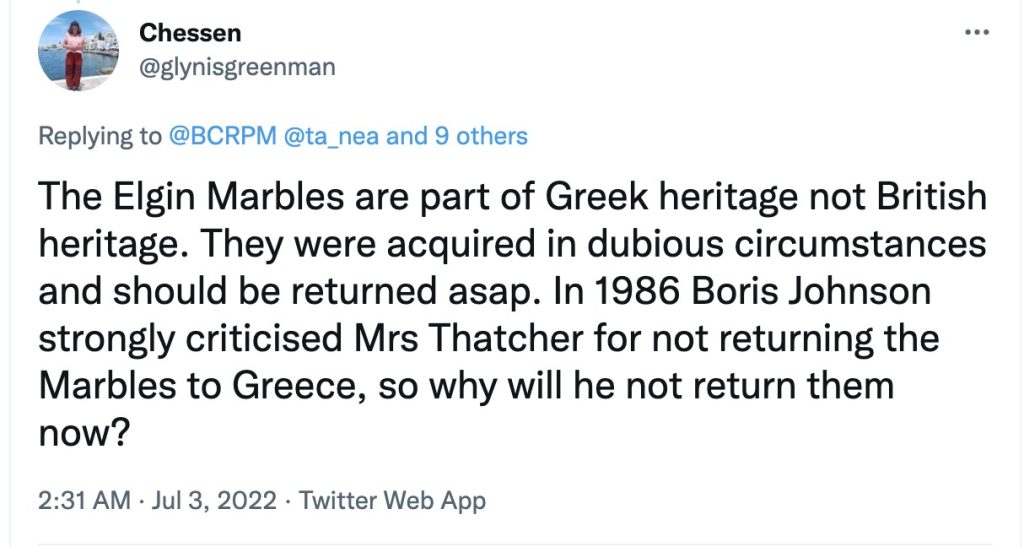
So what do you think? Are they the Elgin Marbles or the Parthenon Marbles?
Technically, the British Museum refers to them as the Parthenon Marbles due to a successful campaign run by the British Committee for the Reunification of the Parthenon Marbles. However, there is still much more action needed if the Marbles are to be returned to Greece.
In Great Britain, members of Parliament are required to respond to any letter they receive from a constituent. This is a great place to start if you are looking to take action. And, if you’re not a British citizen, you can still make your voice heard.
As you have seen here, countless individuals are joining the conversation on Twitter. Actions create momentum, and momentum inspires change. No matter how small and insignificant your tweet may seem, it has the power to make a difference. If you’re passionate about a debate — no matter how ancient it may be — make your voice heard. Twitter can be a fantastic platform to start the conversation.